Commercial Laminate Repair: Reface or Replace?
Deciding between commercial laminate repair , refacing, or full replacement depends primarily on the structural integrity of your millwork's core. If the underlying cabinets are sturdy but the surface is damaged or dated, refacing is a cost-effective solution. If the core is rotted or warped, full replacement is necessary.
When is commercial laminate repair the best option?
For many facility managers and business owners across the Mid-Atlantic region, the first instinct when seeing a chipped counter or a peeling cabinet door is to order a complete tear-out. However, commercial laminate repair is often the more strategic choice for minor cosmetic issues. Small chips, localized delamination, or surface scratches can frequently be addressed without removing the fixture from the premises.
Laminate is a remarkably durable material, composed of layers of paper and resin fused under high pressure. In high-traffic environments like medical offices in Delaware or retail spaces in Virginia, surface wear is inevitable. Repairing these small defects early prevents moisture from reaching the substrate—usually particle board or MDF—which could otherwise lead to structural failure. If the damage is limited to less than 10-15% of the surface area and the 'bones' of the cabinetry are dry and solid, a professional repair can extend the life of your investment by years.
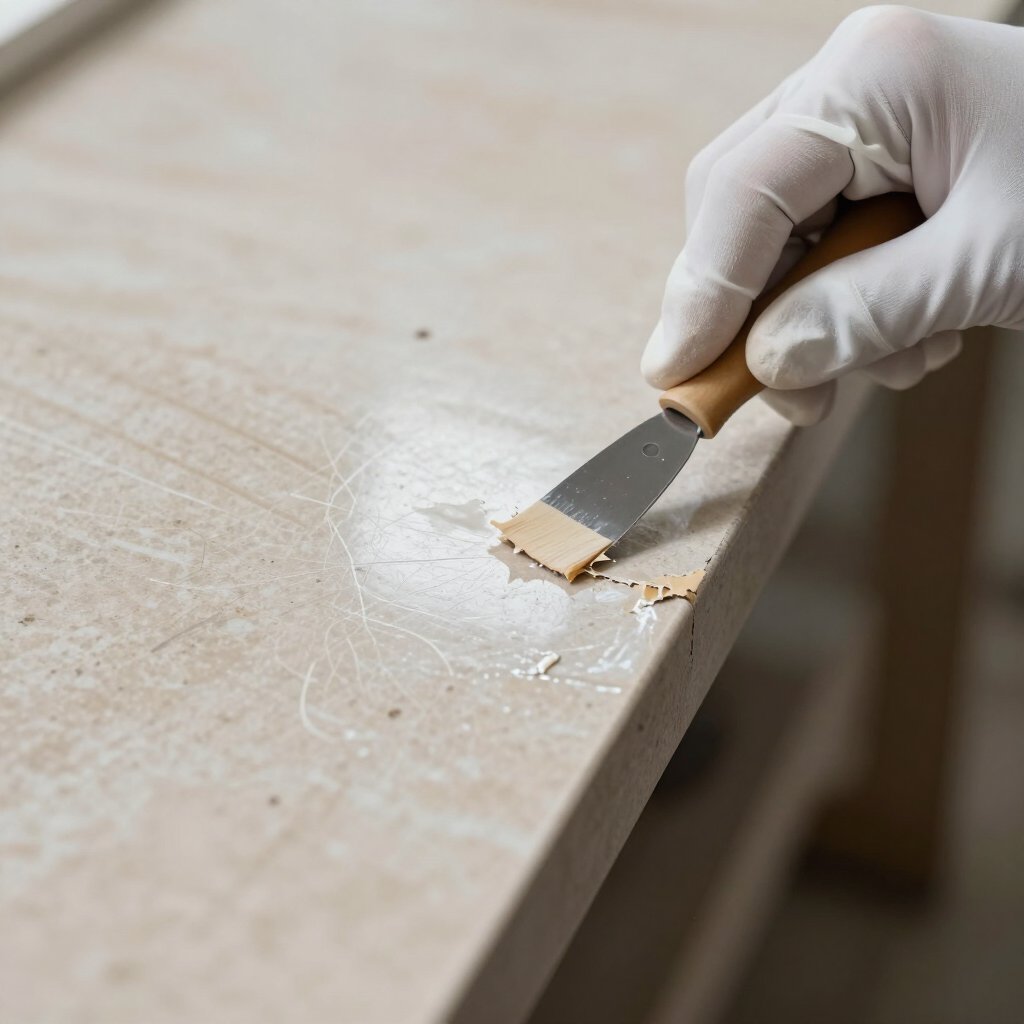
Common signs that repair is sufficient:
- Small chips at the edges of countertops.
- Minor surface scratches that haven't penetrated the decorative layer.
- Bubbling or lifting at a single seam due to localized heat or moisture.
- Scuff marks from equipment or furniture impact.
- Loose hinges or hardware that don't involve stripped cabinet walls.
What are the benefits of laminate refacing for businesses?
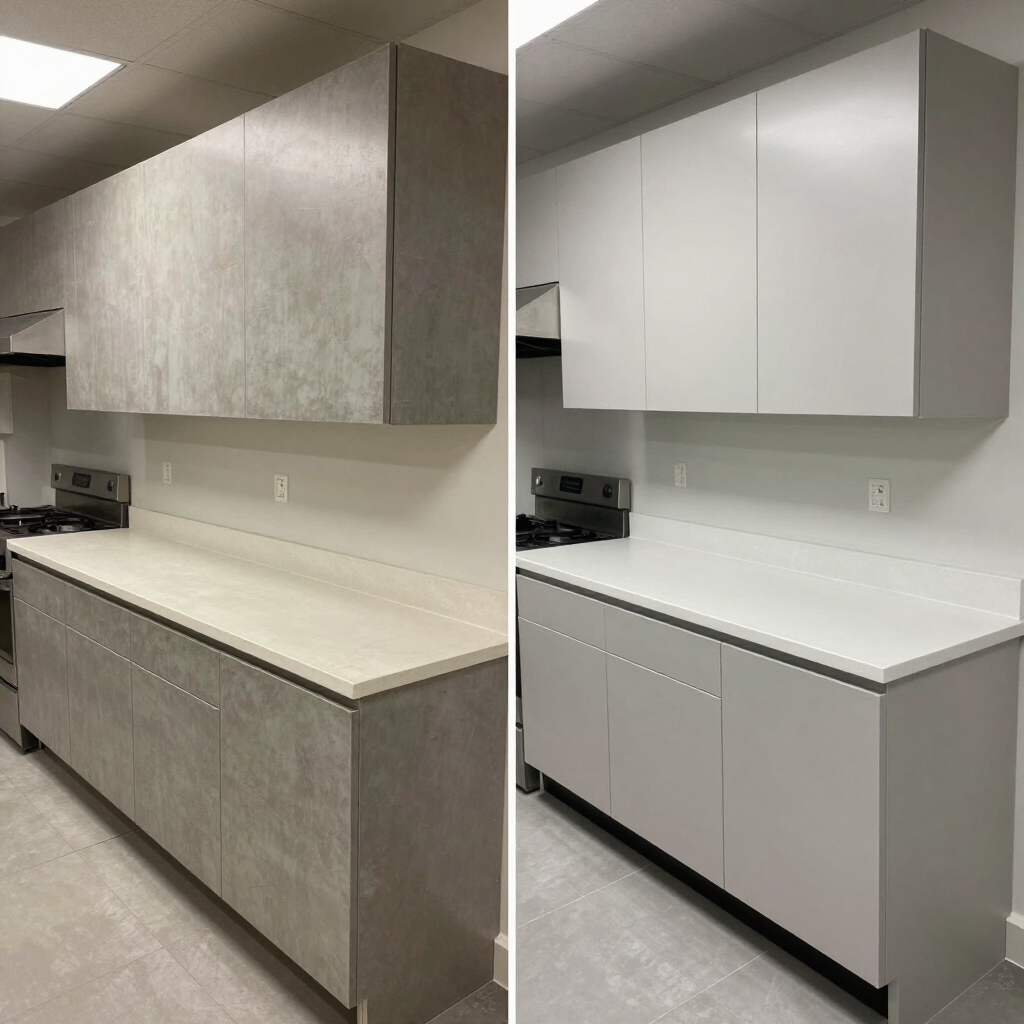
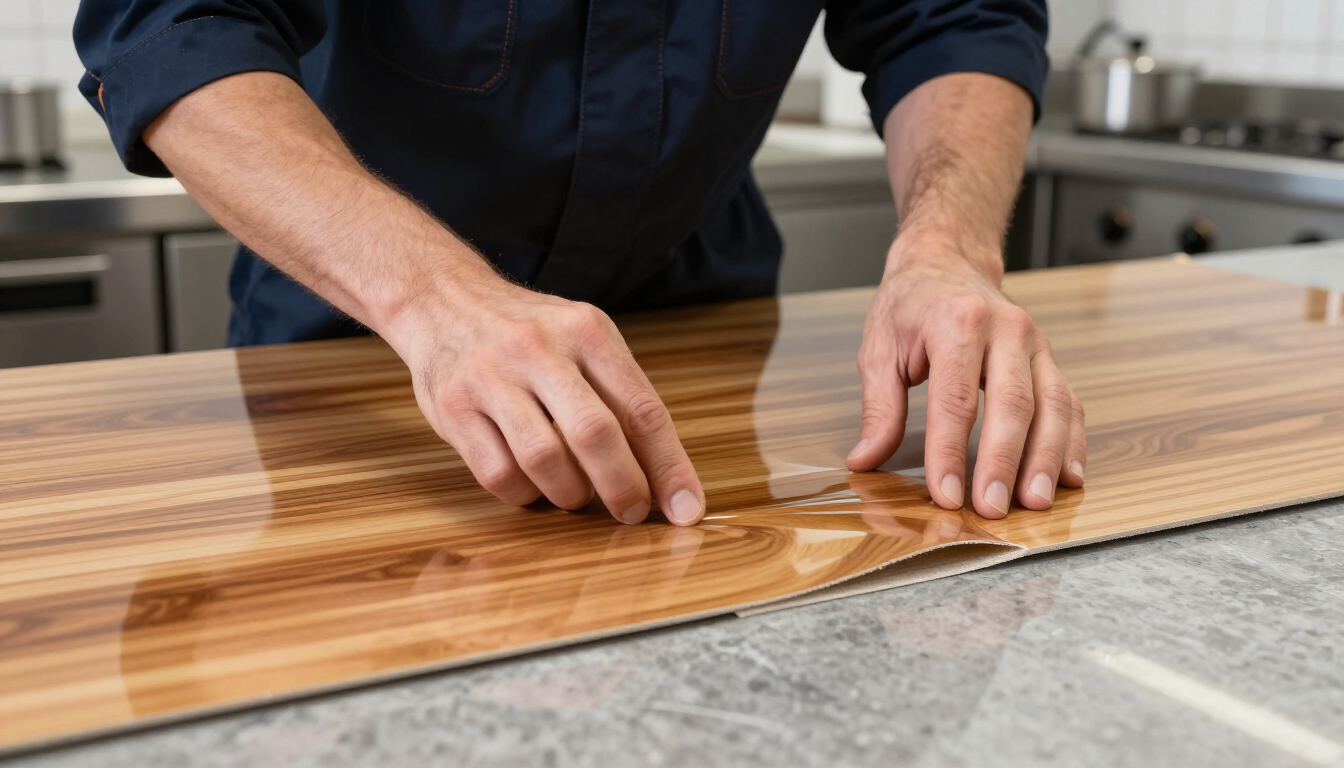
When the damage is too widespread for simple spot repairs, but the internal structure of the commercial millwork & casework remains sound, refacing becomes the gold standard for renovation. Refacing involves removing the old laminate skins and doors and applying a fresh, modern layer of High-Pressure Laminate (HPL) over the existing frames.
This approach offers several transformative benefits for active businesses:
- Significant Cost Savings: Refacing typically costs 30% to 50% less than a full custom replacement.
- Reduced Disruption: Because the main structures stay in place, there is no demolition, less dust, and projects are often completed in days rather than weeks.
- Sustainable Choice: You keep perfectly functional wood and substrate out of Maryland and Pennsylvania landfills.
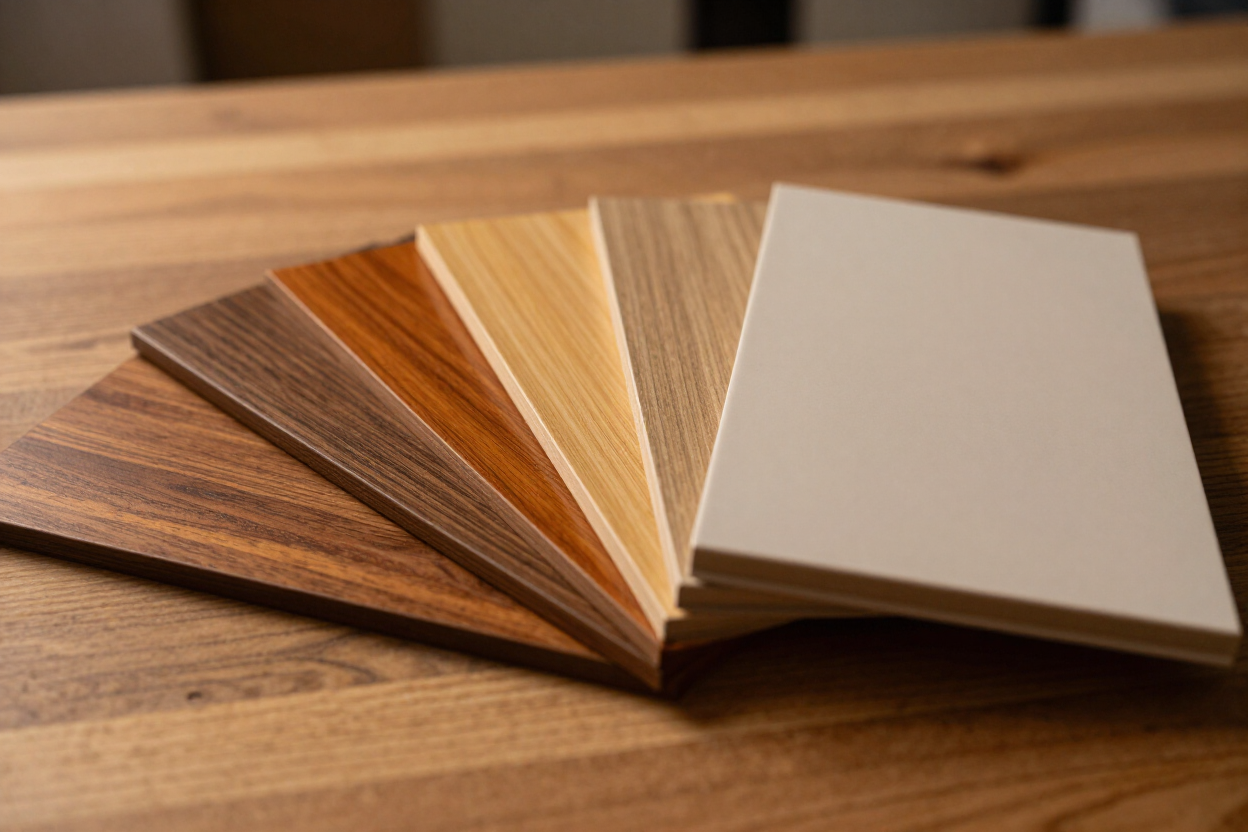
- Aesthetic Evolution: You can completely change the look of your facility—moving from dated 90s oak patterns to sleek, modern stone or metallic finishes.
- Preserved Layouts: You don't have to worry about footprint changes affecting flooring, plumbing, or electrical connections.
At our family-owned business, we have spent 30 years helping clients understand that a 'new look' doesn't always require a 'new build.' Refacing allows you to reallocate your budget toward other facility upgrades while still achieving a high-end, professional finish.
Choosing the Right Solution for Your Space
Different industries have different tolerances for wear and different requirements for hygiene and durability. A retail shop in a Parkton, MD mall might prioritize the aesthetic flexibility of refacing to keep up with branding trends. Conversely, a surgical suite in a Northern Virginia hospital may require full replacement to ensure that every surface meets the highest standards for infection control and non-porous integration.
When evaluating your options, consider the 'Lifetime Value' of the solution. A cheap repair might save money this quarter, but if the facility sees heavy use, a comprehensive refacing or a strategic replacement might be more economical over a five-year horizon. Our team brings three decades of experience to this evaluation, helping you navigate the specifics of HPL grades and substrate materials to find the sweet spot between budget and longevity.
Understanding the Laminate Refacing Process
The technical execution of a refacing project is what separates a temporary fix from a long-term solution. In a commercial setting, durability is non-negotiable. The process begins with a thorough inspection of the substrate. We look for 'blown' edges—areas where moisture has caused the underlying wood to swell. If these are found, they must be sanded down or filled with industrial-grade binders before the new laminate is applied.
Once the surfaces are prepped, a high-strength contact adhesive is used to bond the new HPL to the existing casework. In professional custom cabinets, countertops & fixtures work, the pressure applied during this bonding phase is critical. For businesses in the Mid-Atlantic, where humidity can fluctuate significantly between the hot New Jersey summers and cold Virginia winters, using the right adhesive and edge-banding technique is the only way to ensure the laminate doesn't fail prematurely.
How do you know when to replace commercial millwork?
While we always advocate for the most efficient solution, there are times when commercial laminate repair or refacing simply won't cut it. Full replacement is the only viable path when the 'foundation' of your millwork has failed. In commercial environments, this usually stems from three main issues: water damage, structural instability, or a fundamental need for a new layout.
If you open a cabinet door and see crumbling particle board, or if the countertop is visibly sagging in the middle, the core has lost its load-bearing capacity. No amount of new laminate will fix a shelf that can no longer hold the weight of medical files or kitchen equipment. Furthermore, if your facility is undergoing a major technological upgrade—such as a hospital integration of new diagnostic equipment—the old cabinet dimensions might be obsolete. In these cases, starting from scratch allows you to design for current needs, incorporating modern wire management and ergonomic standards.
Indicators that you need a full replacement:
- Pervasive mould or mildew smell coming from the cabinets.
- Significant swelling of the substrate that has distorted the shape of the unit.
- Broken or collapsed cabinet 'boxes' (the internal structure).
- A change in the footprint of the room that makes existing millwork unusable.
- The cost of multiple repairs and refacing starts to approach 80% of new construction costs.
Is refacing cheaper than full replacement?
In almost every commercial scenario, refacing is significantly more affordable than a full replacement. However, the 'cost' isn't just the invoice from the millwork company; it includes the hidden costs of downtime. If you choose a full replacement for a busy hotel lobby in Baltimore, you have to factor in the loss of revenue during the demolition and installation phases.
Refacing minimizes these 'soft costs.' Because the work can often be done in sections or after hours, your business remains operational. Furthermore, there are often tax advantages to refacing. While new capital equipment (full replacement) follows specific depreciation schedules, repairs and maintenance (refacing/repair) can sometimes be expensed differently. Always consult with your financial advisor, but from a pure labor and materials standpoint, refacing is the clear winner for cost-conscious facility managers.
Signs of Irreparable Structural Damage
Identifying 'point of no return' damage is crucial to avoid throwing good money after bad. We look for 'telegraphing'—when the damage in the substrate is so severe that it shows through even a new layer of laminate. If the underlying wood is flaky, soft to the touch, or shows signs of pest infestation, it is structurally compromised.
Additionally, check the anchoring points. If the screws holding the cabinets to the wall are pulling out because the wood has turned to 'mush' from years of floor mopping or pipe leaks, the unit is a safety hazard. At this stage, contact us to discuss a complete redesign and installation of new, moisture-resistant commercial fixtures.
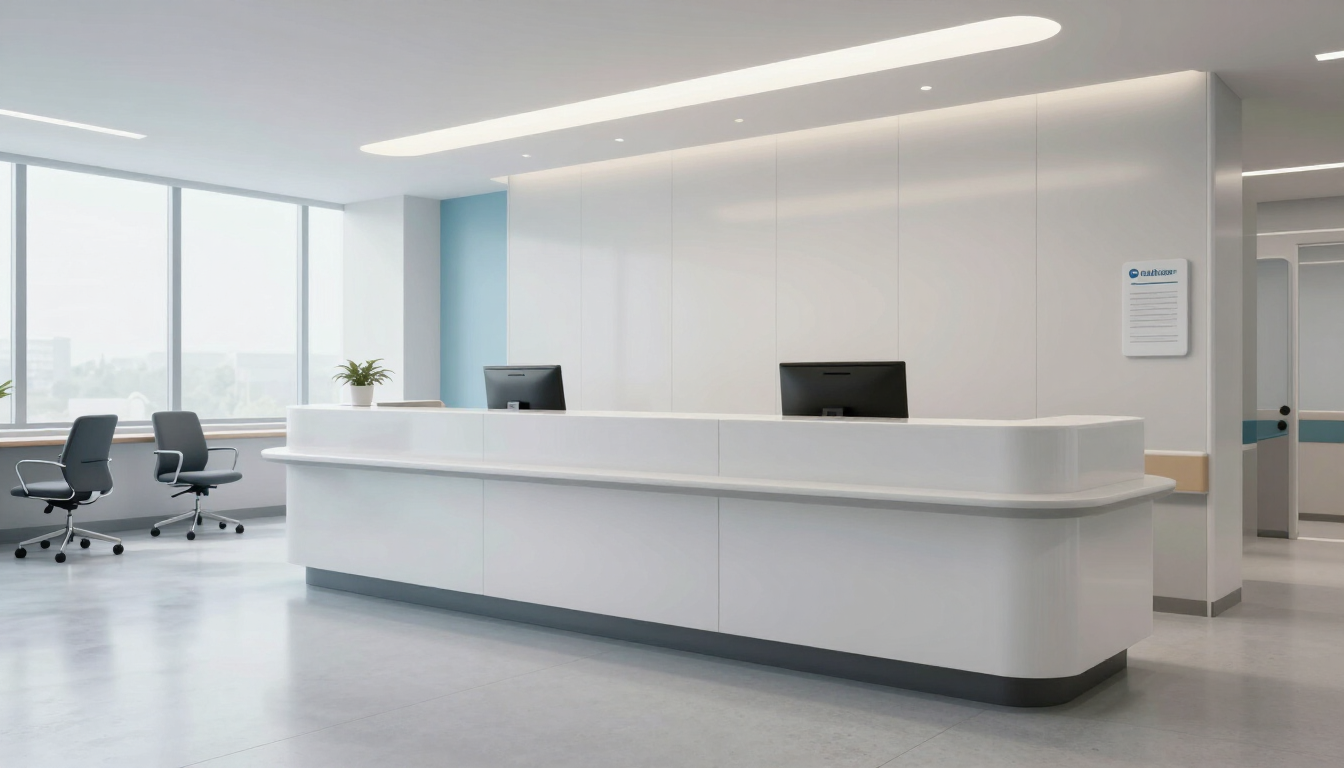
Summary of Commercial Millwork Strategies
Determining the right path for your commercial fixtures requires balancing immediate needs with long-term facility goals. By choosing the right approach, you can maintain a professional environment without unnecessary expenditure.
Key Takeaways for Facility Managers:
- Assess the Core: If the internal wood is solid, refacing is your best friend for cost and speed.
- Address Small Issues: Perform commercial laminate repair early to prevent moisture from destroying the substrate.
- Plan for Disruption: Choose refacing for 'live' environments where closing down is not an option.
- Know When to Fold: Don't waste budget on refacing structures that are mouldy, sagging, or structurally unsound.
- Modernize Materials: Use renovations as a chance to upgrade to higher-grade, antimicrobial, or impact-resistant laminates.
Whether you are managing a single office in Parkton, MD, or a multi-state retail chain across the Mid-Atlantic, our 30 years of experience ensures your millwork remains an asset, not a liability. Reach out today for a professional assessment of your commercial surfaces.
Recent Posts